BioContaiment Unit


BioContaiment Unit
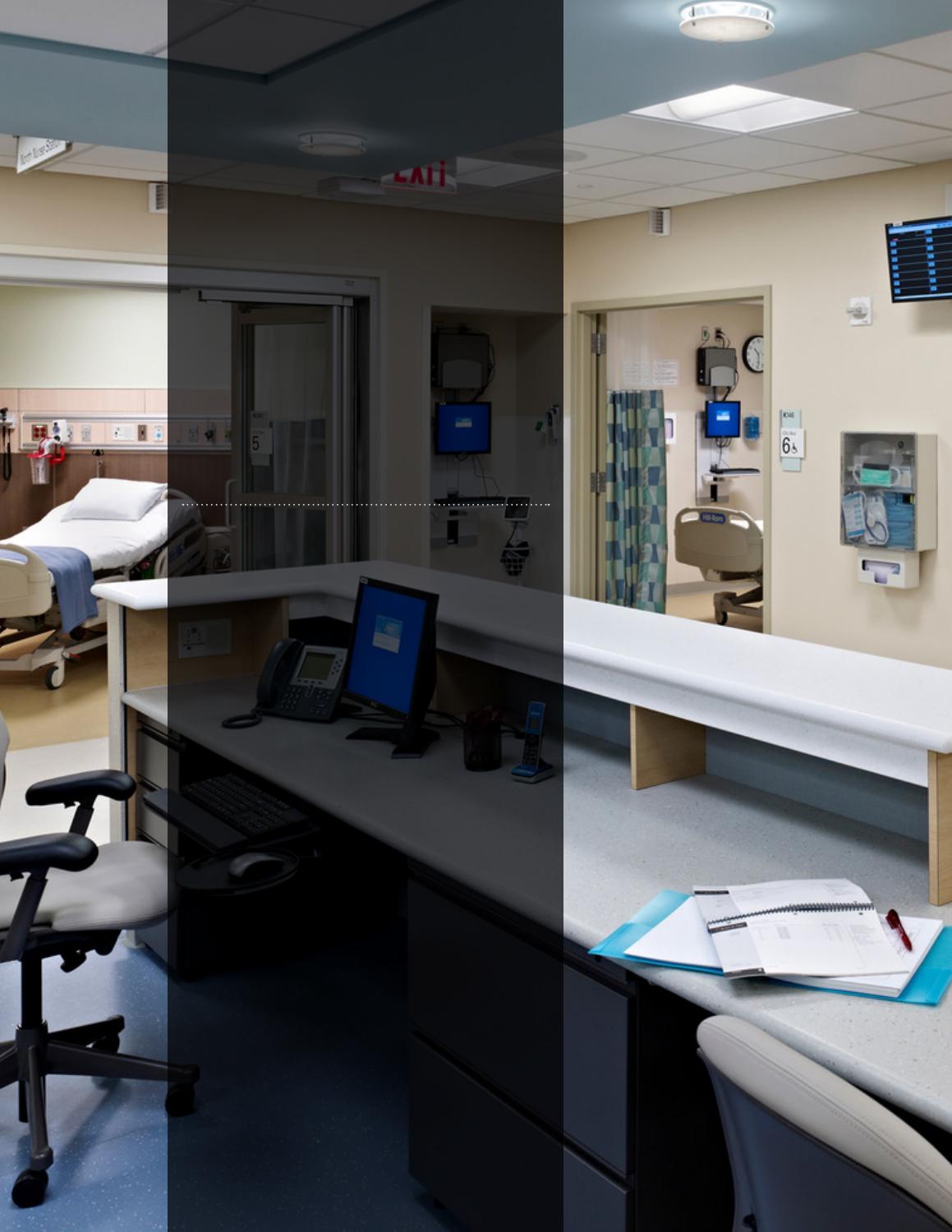
Flexible care unit adjacent to an urban ED converts quickly from ED space to critical care to bio-containment.
.jpeg)
.jpeg)
.jpeg)
The Need
In response to the recurring threats of infectious disease outbreaks presenting major risks to public health and safety, Array was engaged to create a Bio-Containment Unit (BCU). As one of their region’s largest hospitals, they will integrate the Unit into a facility that is a hub for advanced critical care and well-suited to serve as an Ebola Treatment Center. The Unit is designed to ensure the safety of patients and staff, provide a versatile environment capable of both bio-containment and airborne infection control, as well as enable leading-edge treatment methodologies.
Phasing
The construction team is completing the project in three phases. Phases 1 and 2 relocate the Admissions Testing Center and a specialty administrative office suite, and the third and final construction phase creates the BCU, accommodating the multi-functional patient care unit as depicted in floor plans to follow.
Unit Location
The BCU is designed to occupy 6,500 SF of the first floor. Staff determined this location is ideal with its proximity to the Emergency Department triage area, first floor entrances, and elevators to the lower level loading dock. This first floor location is important to staff as it will allow the Hospital to quickly convert the space from an observation unit or airborne infectious disease critical care to a BCU. A reception station is located at the entrance of the Unit to control all access and serve as a communication conduit. A large designated work area for clinicians is located to provide them direct visibility to the patient rooms.
Flexible Design
The flexible design of the BCU patient rooms allows the Hospital to use the Unit at all times and minimizes downtime when transitioning between normal operations and special isolation use. The patient room size and the modularity of equipment and casework allow for a quick transformation from a patient room to support space, or from a double observation room to a single critical care patient room.
Patient rooms are designed with utilities and finishes required under each circumstance, and clinicians and administrators from several departments were integral in developing this comprehensive design that accommodates each scenario.
The space can be configured in three modes:
- Serving as an observation unit for up to 15 patients, with seven semi-private rooms and one private observation room.
- Converting into a seven-patient airborne infection isolation critical care unit.
- Converting into a two-patient biocontainment critical care unit complete with lab and support spaces for decontamination, including two ensuite autoclaves.
Containment & Safety Protocol
There are three major areas within the BCU to ensure patient and staff safety. These areas can convert quickly between three functions: BCU doffing, patient room pressurization, and staff workstation.
Within the BCU doffing area there is a shared anteroom/doffing room that accommodates cold and warm zones, providing one-way flow to the patient rooms. Staff don personal protective equipment (PPE) in a separate donning room and access the patient room from the cold zone of the shared anteroom. Exiting the patient room through separate doors within the anteroom/doffing room’s warm zone, staff doff (remove) their PPE, directly assisted by a helper, while a reader within the room’s cold zone calls out step-by-step instructions. A watcher outside of the anteroom/doffing room observes the process for safety.
Hand washing, the final step of the doffing process, occurs in the room’s cold zone. Trash is processed for safe transport across the corridor to be sterilized in autoclaves. Equipment and reusable PPE are processed in the decontamination room.
The patient rooms are negatively pressurized to protect adjacent spaces. One hundred percent outside air is supplied via laminar flow diffusers along the room perimeter to minimize air mixing. A return diffuser is located just above the patient’s head, drawing contaminants away from providers and patients.
HVAC Central System Design Features
Air handling systems are dedicated to serve only the Bio-Containment Unit. All spaces in the unit are fully exhausted and provided with 100% outdoor air.
High plume dilution “laboratory”-type exhaust fans with upstream bag-in/bag-out HEPA filtration banks feature high-velocity nozzles for diluting and dispersing hazardous exhaust.
Systems include redundant equipment, including a four-fan supply fan array with one redundant fan, and a fully redundant exhaust fan and associated HEPA filter bank.
Heat recovery devices were not included to eliminate any risk of cross-contamination between supply and exhaust air streams or contamination of maintenance staff during equipment service or repair.
HVAC Distribution Systems
Room total air changes per hour (ACH) are increased to 20 for bio-containment patient rooms, exceeding the minimum 12 ACH required by FGI/ASHRAE 170 for airborne infectious isolation rooms.
Each room is provided with supply and exhaust terminal units equipped with digital controls to regulate airflow and space pressure.
Each room includes local digital room pressure monitors to track and control pressure differentials
between:
the patient room and the corridor
the patient room and the anteroom/doff area
the corridor and the anteroom/doff area
Each room includes a local mechanical pressure differential indicator as a secondary visual monitor.
Exhaust air registers are located on the headwall directly above the patient bed to capture airborne contaminants as close to the patient as possible.
Laminar/unidirectional flow (ASHRAE Group E) air devices are positioned around the perimeter of the bed.
Embracing Technology
This design supports future readiness by combining technology and flexibility. The Unit incorporates technology such as two-way video chat to connect patients with caregivers, family, and friends. Cameras monitor both patients and staff.
Simulation Mockup
Array collaborated on a simulation mock-up of this BCU for exhibition at HITT Contracting’s Co|Lab, a space dedicated to bringing ideas to life and serving as a hub for research and testing of emerging materials, approaches, and technologies that will rapidly transform the construction and real estate industries. The mock-up serves as proof of concept for the project and establishes a platform for demonstrating the intended use of the space to other institutions, as well as soliciting peer-to-peer feedback on a critically important and growing area of specialized healthcare.
Challenge
To provide appropriate facilities to care for patients sickened by hazardous conditions brought on by bio-terrorism and large-scale disease outbreaks, with the flexibility to use the space for less emergent needs as needed.
Solution
A multi-phased construction effort will put in place a Unit designed to handle airborne disease and other potential disasters, as well as serve as a much needed Observation Unit when census demands.
