Design Feature: Central Sterile Processing Department at Mt. Sinai West
Relieve capacity pressures from surgical growth by designing efficient, scalable sterile processing environments that improve workflow, staff experience, and operational performance.
When health systems expand, support services often need to grow to support increased volumes. A common example of this is the expansion of Central Sterile Processing Departments (CPSD) following the opening of additional operating rooms. Array recently led a project to meet this need for Mount Sinai West Hospital in NYC. In this design feature, we’ll explore how our team’s understanding of departmental workflow, multidisciplinary collaboration, and clever interior design elements can help you zero in on the most essential aspects of CSPD design.
Assembling a Collaborative Team
To assist Mount Sinai West Hospital with the expansion of their Central Sterile Processing Department (CSPD), Array first assembled a well-rounded team. The multidisciplinary team was composed of Medical Planners, Architects, an Interior Designer, Engagement Manager, MEP & Structural Engineers (AKF & Thornton Tomasetti), and Mount Sinai’s CSPD department heads.
Unlike traditional design schedules where a small group develops the plan and then a different team documents it, every person on this team contributed during all phases of design and construction. Throughout the project, team huddles were conducted weekly to keep everyone on the same page. Constantly sharing information and retaining transparency on project specifics created a better understanding of the overall project, schedule, details, and finances.
Understanding Workflow to Optimize Design
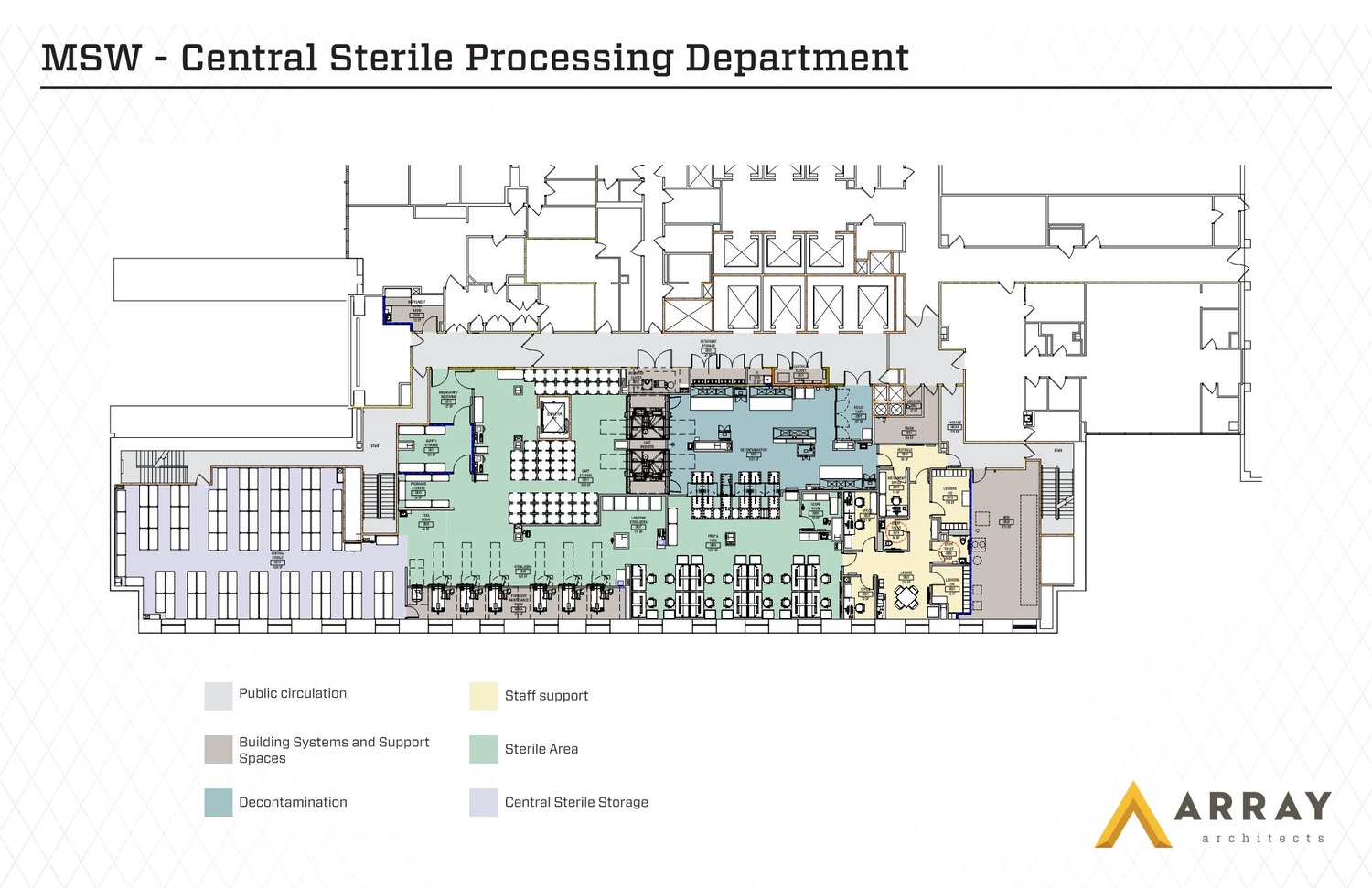
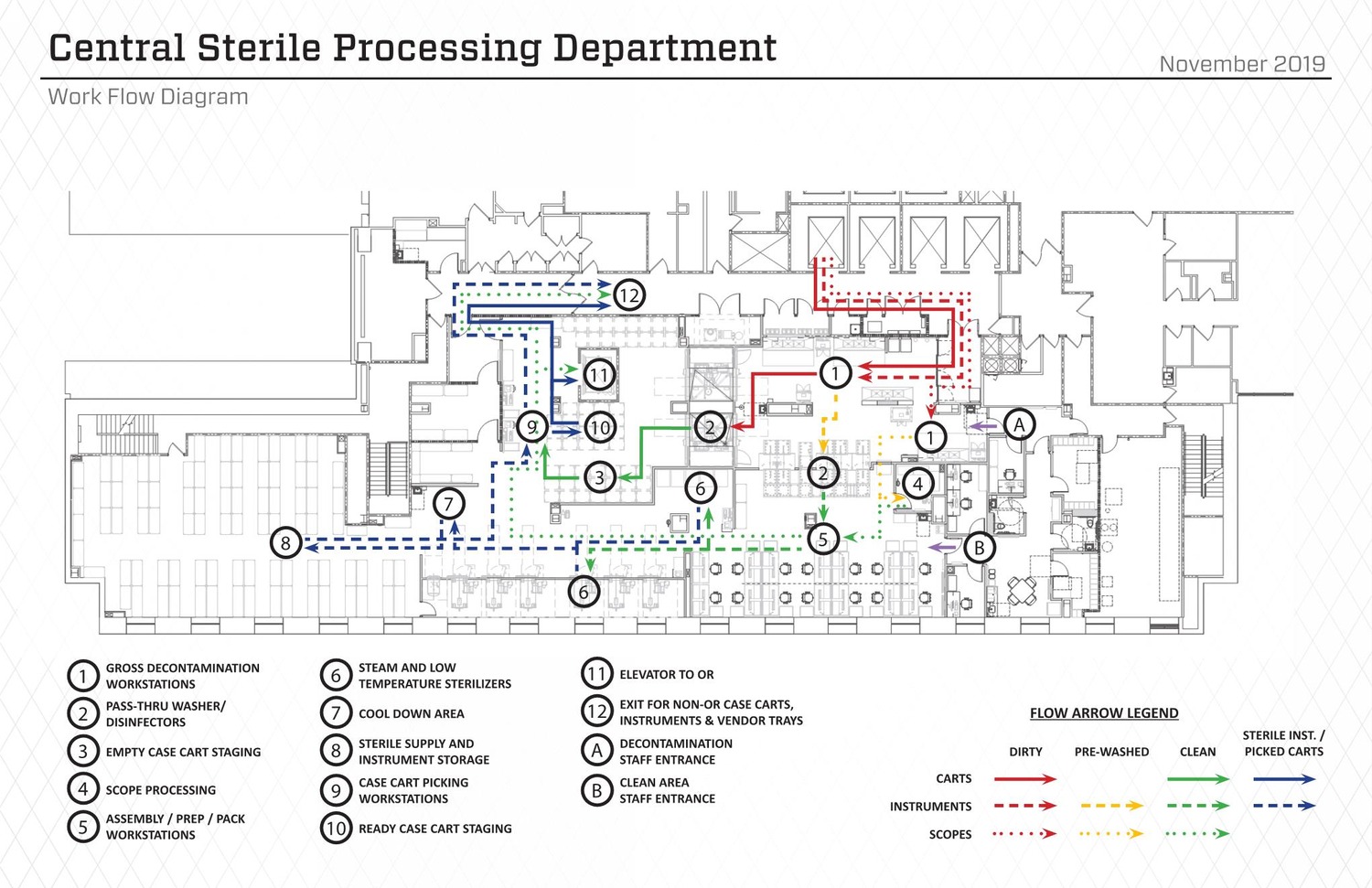
The new CSPD provides Mt. Sinai West the capacity to service the current and new operating rooms as well as off-site departments requiring high-level sterilization. At the initial project meeting, the team documented the workflow of the department, focusing on the process of cleaning, sterilizing, and packing of tools and materials.
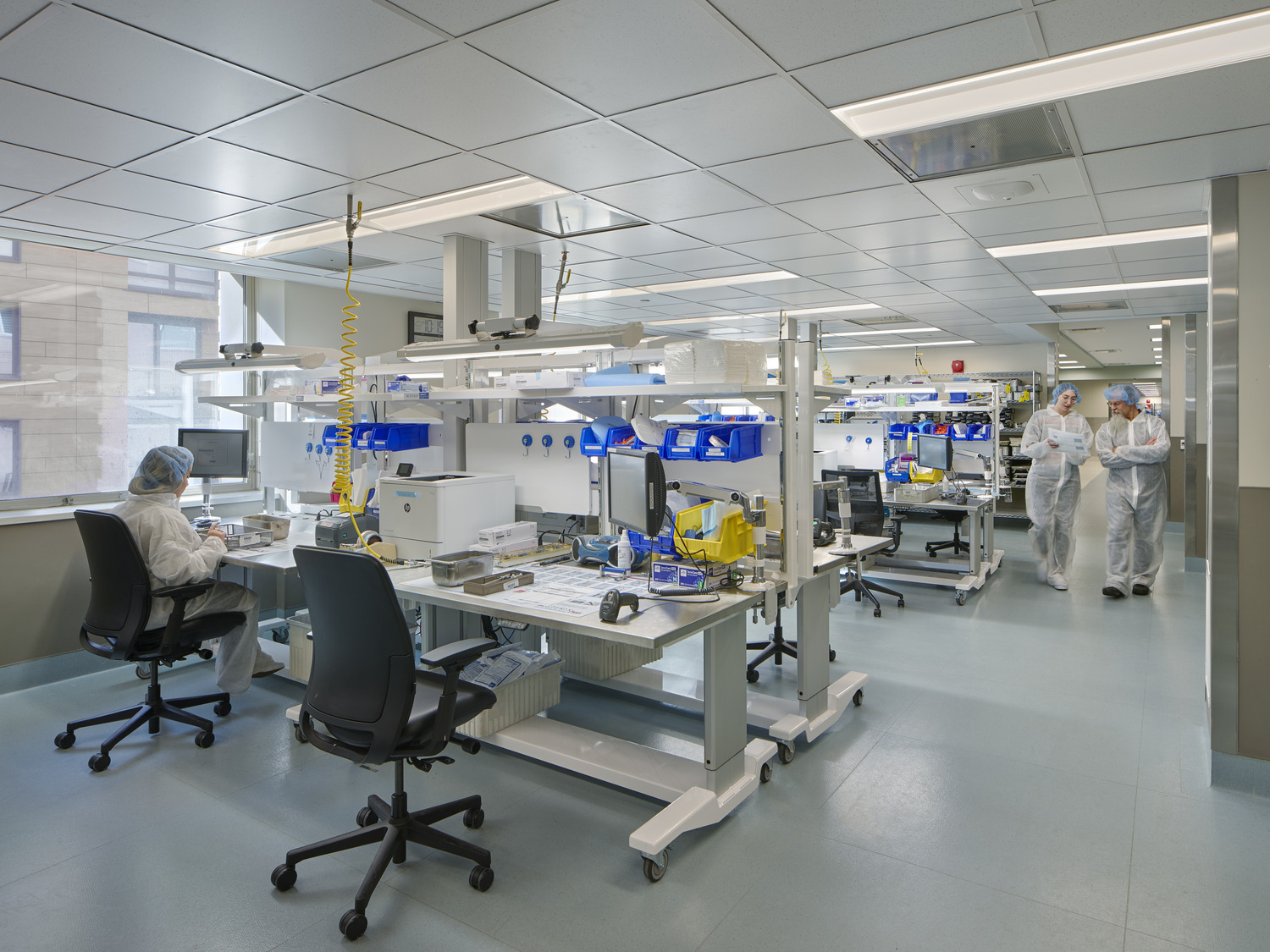
Understanding departmental workflow enabled our team members to make informed design choices. Since our Interior Designer was included in the first meetings where staff requested a comfortable flooring surface to reduce the effects of standing during most of their shift, she was able to guide flooring selection. Initially, the hospital requested hard flooring for the clean side due to the high-impact nature of the constantly-moving case carts. This contradicted staff requests for ergonomic underfoot surfaces. Rosana suggested high-impact rubber flooring that met both comfort and durability needs.
Aligning Workflow with Equipment Placement
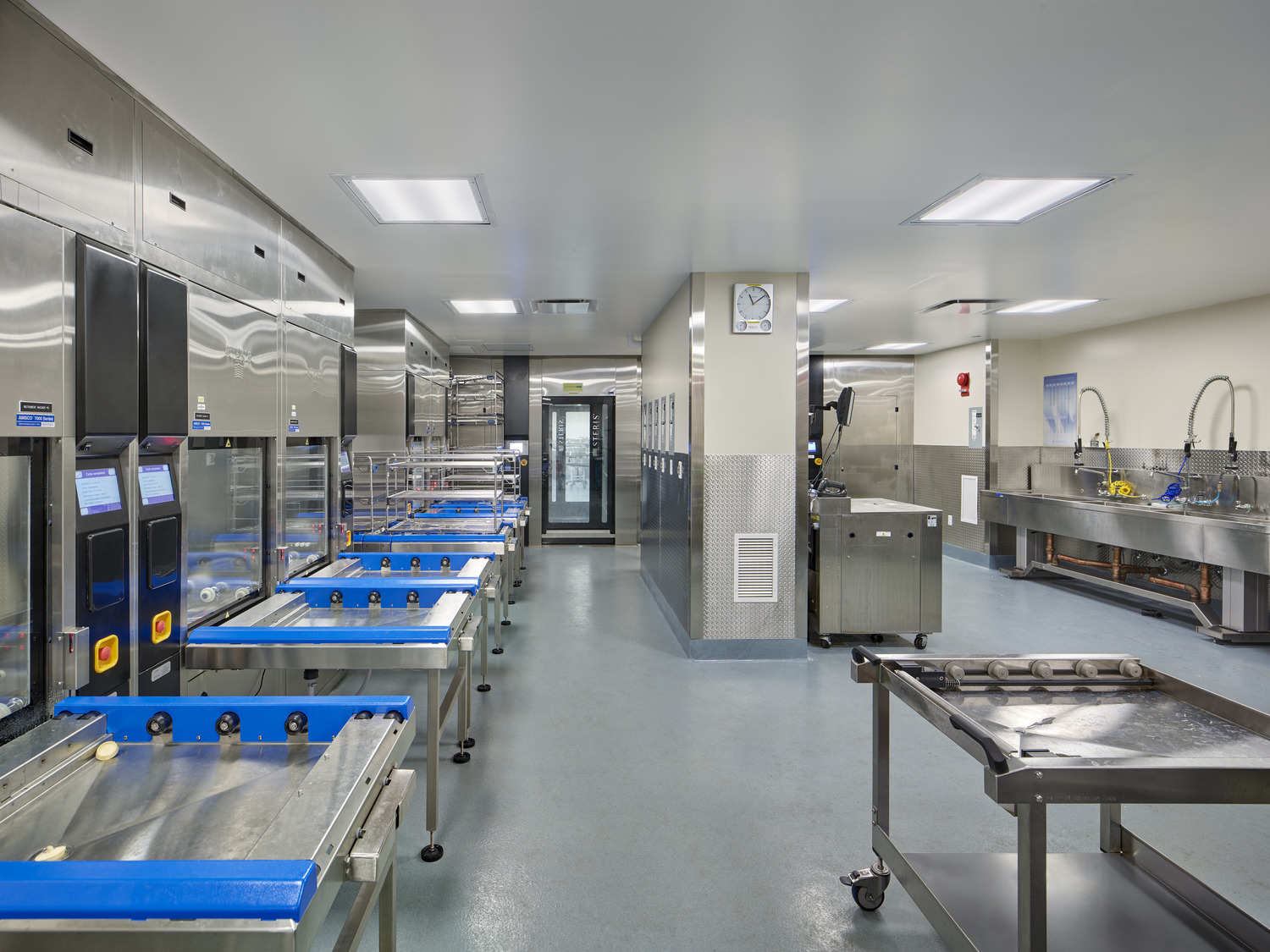
The flow of the CSPD is highly dependent on equipment placement. Working with Steris, the team developed an optimal flow of equipment, instrumentation, and people through the process. Dirty case carts arrive at the CSPD and are brought into the decontamination side, washed, and then cleaned in pass-through washers. Tools then enter the clean side, are assembled into packages, sterilized, stored, and distributed to operating rooms.
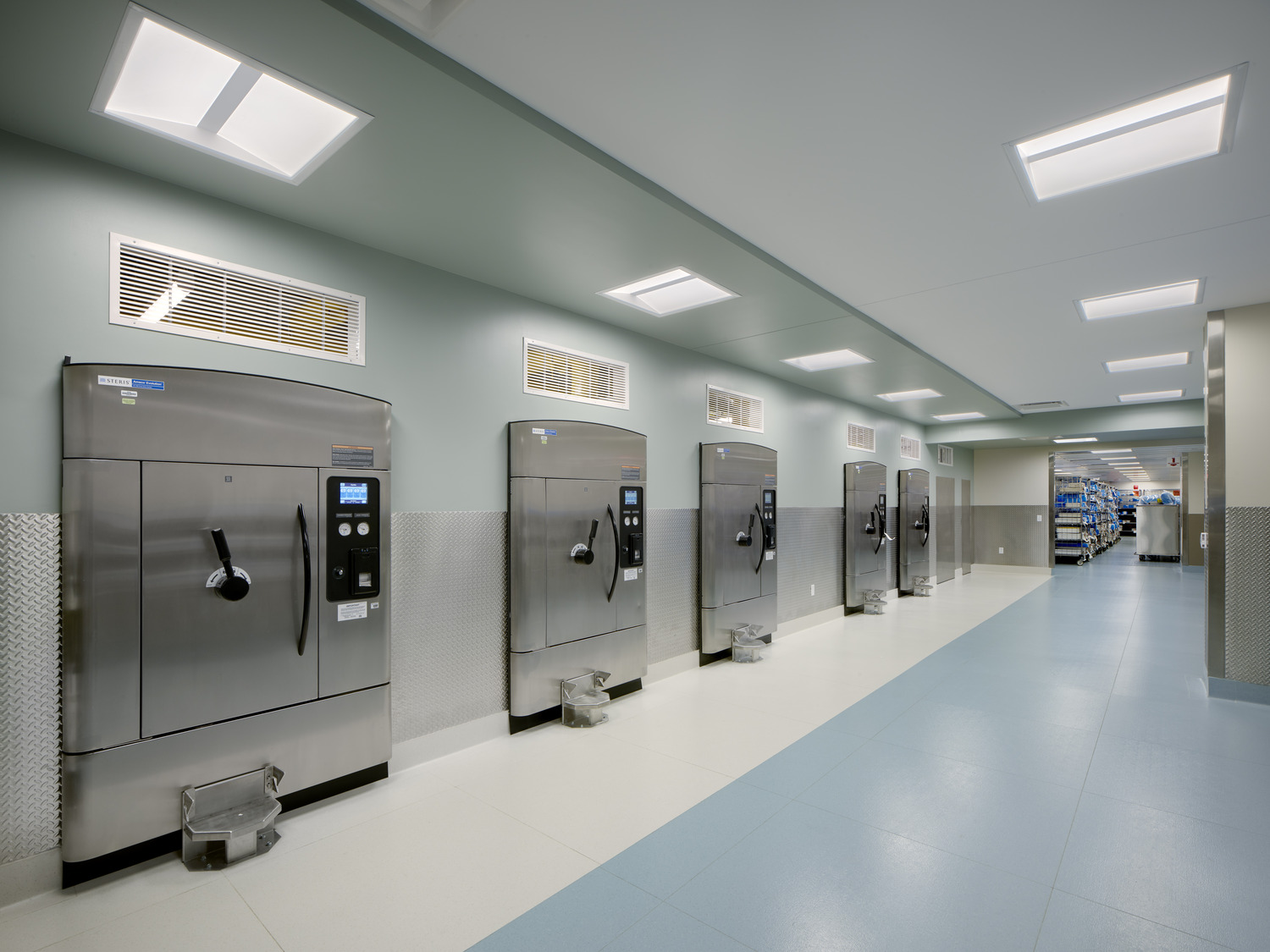
The equipment used is highly specialized and large, requiring coordination of all disciplines. Drain locations, slab depressions, and conflicts with the pharmacy below were resolved through careful coordination.
Applying Color to Define CSPD Zones
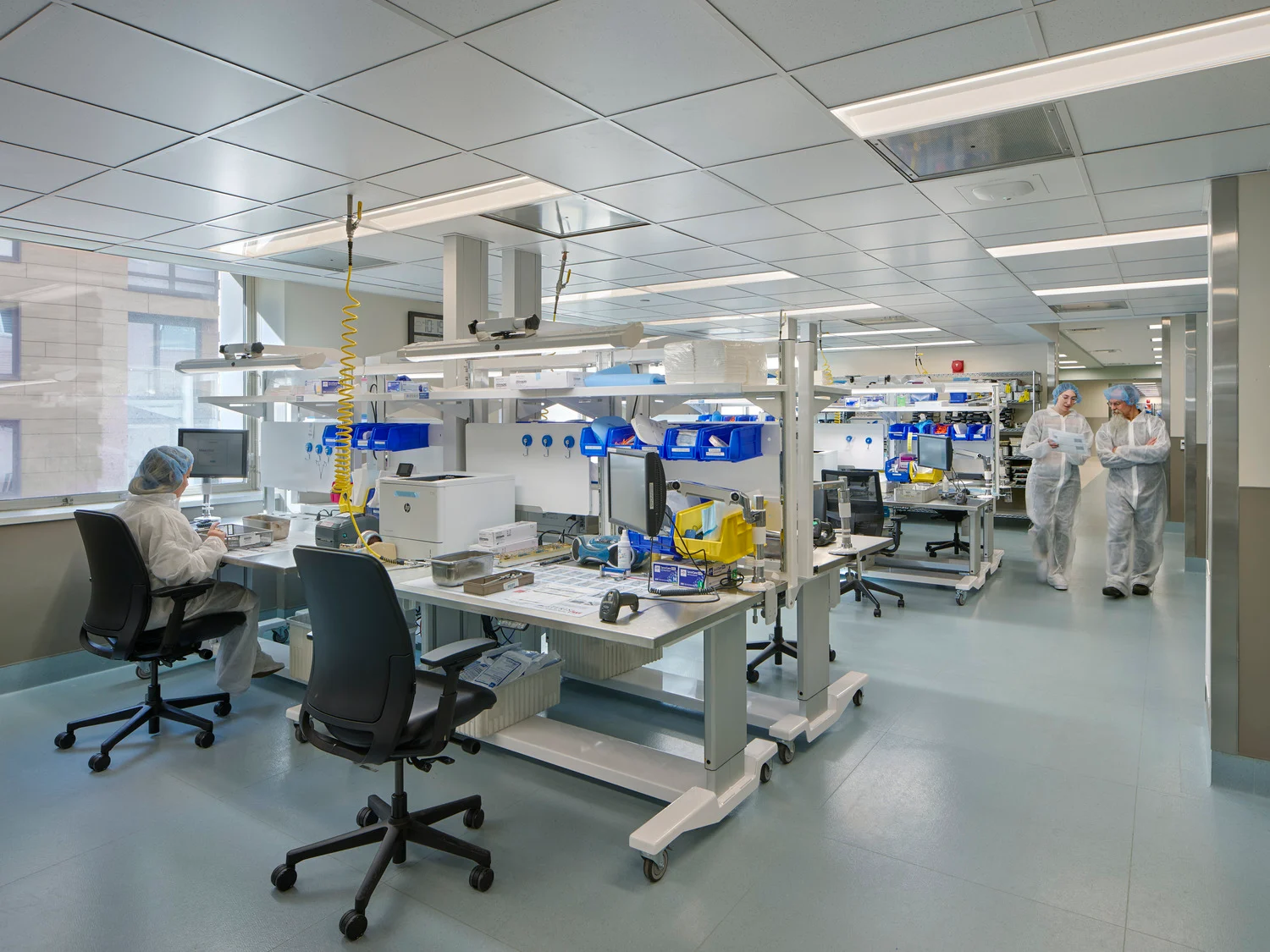
CSPD layouts are characterized by large open rooms. To define functional zones without walls, the interior design team used different accent colors, ceiling heights, and light fixtures. These distinctions help maintain clarity and organization within open-plan spaces.
Electing for Selective Design Moments to Control Costs
Back-of-house areas like storage and clean rooms often have simple designs to control costs. However, the CSPD used a warm neutral palette with blue accents and cream flooring to create visual interest.
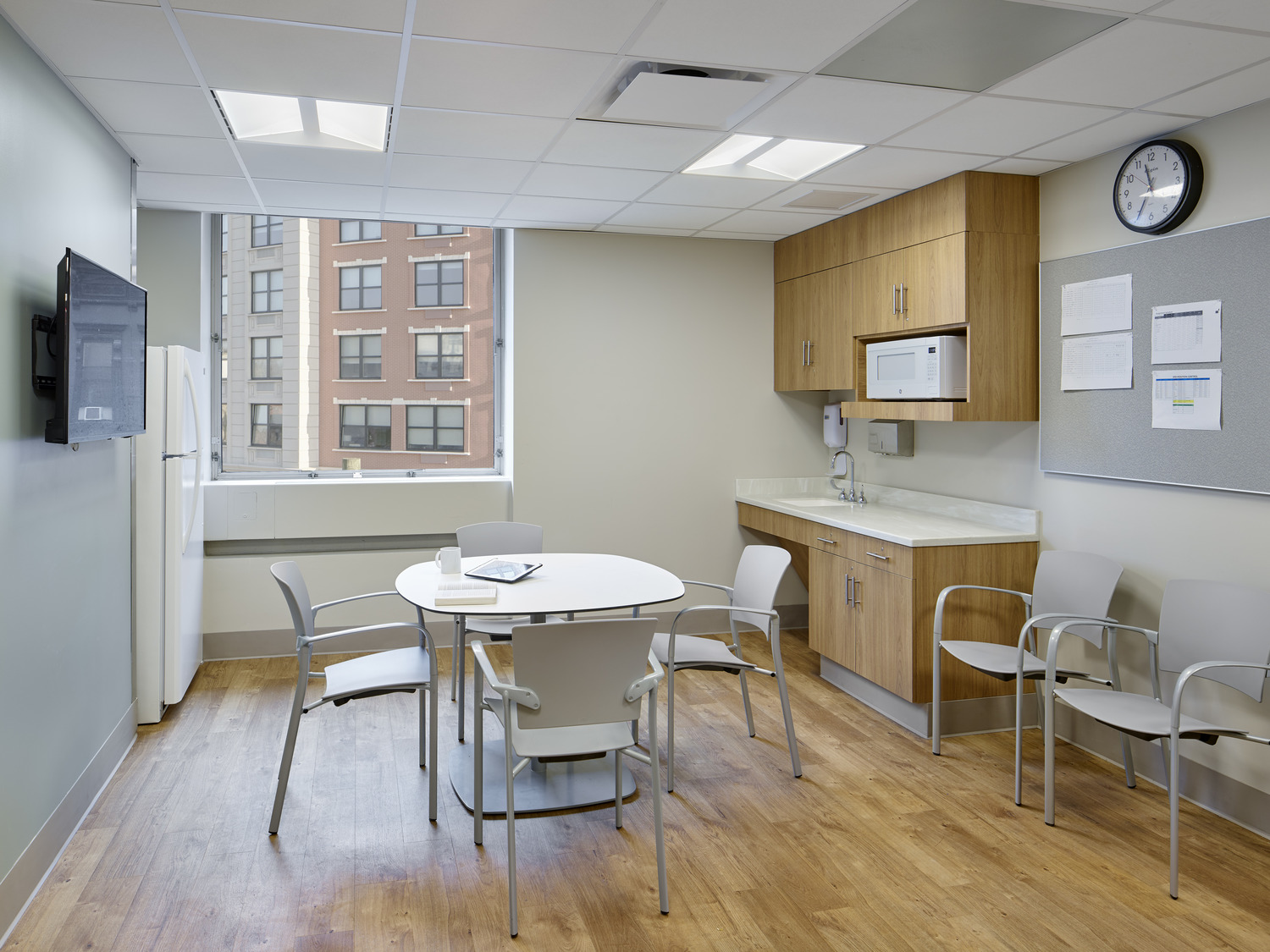
In the staff lounge, warm tones, wood finishes, and green accents were used to create a comfortable, home-like space.
Applying Specialized Finishes for Decontamination
The decontamination room required durable, chemical-resistant finishes. Urethane resin flooring, diamond plate wall protection, and epoxy paint provided durability, safety, and easy cleaning.
Team Coordination to Resolve Technical Challenges
Weekly huddles between architecture and engineering teams ensured coordination. For example, under the MRI suite, structural limitations required a steel platform to support MEP systems.
A Smarter Dumbwaiter
.png)
The old dual-lift dumbwaiter system was replaced with a single, large cab for clean case carts, requiring a redesign of the shaft and pit to align with the new layout.
Continued Engagement: Site Visits, RFIs & Addendums
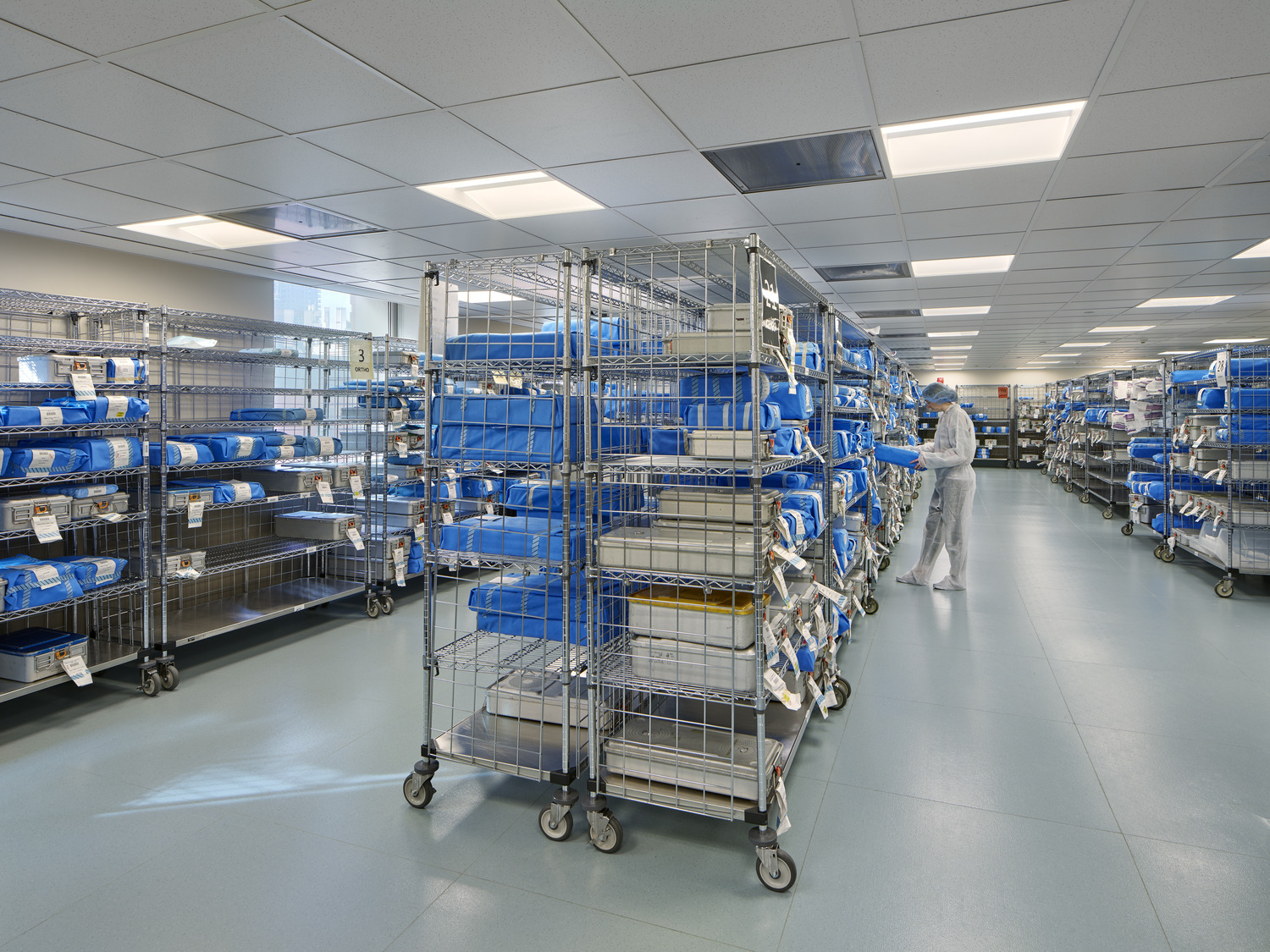
The collaborative nature continued during construction. Team members stayed engaged with site visits, RFIs, and huddles to resolve issues quickly — for example, storage layout adjustments during construction.
The Array Advantage
Having an integrated team throughout the project contributed to the success of the CSPD. Each member brought valuable expertise, and the transparent, collaborative process was key to the project’s success.